Monday, May 31, 2010

Poo. Nature's Nutrition.


Pooh...Get it?

Okay we are not going to talk about the beloved bear. So yeah, you've guessed it! We are going to talk about our nasty little brown, smelly friend: POOP. Feces, doo-doo, number 2, it's all the same. Ever wonder what happens to it? Honestly, this has crossed my mind once or twice. Does it end up in some body of water or does it gather up in a huge pile in some unknown location? Actually to know what happens to it you have to know what poop's other name is. Our poop is also nicknamed "biosolid."


What is a biosolid? A biosolid is an organic material from our poop that is rich in nutrients essential for plant growth. That's right, our poop becomes fertilizer. A biosolid is actually our poop that goes through a careful treatment at wastewater facilities. Who knew that underneath all that beautiful green grass lies our poopy. But there is obviously some sort of trade-off here; there's the good and there's the bad...


THE PROS


So what do we get out of using our poo as fertilizer? Well for one thing, biosolids help improve and maintain healthy soil. Biosolids are able to hold more nutrients and water and can help avoid topsoil runoff. And all you gardeners and farmers know how annoying that can get during the rainy seasons. Biosolids are also rich in nitrogen and phosphorus, very essential elements in plant growth.


We all know what erosion is. For those who don't, it is when the land becomes dry and brittle and breaks apart. Well, with biosolids, you don't have that problem. The organic matter in biosolids helps soil particles bind together. With more soil bound together, the more water it is able to hold. This helps roots grow more and reduces drought.

Other than helping plants grow, biosolids have other benefits. There are communities that are slowly running out of landfills for their solid waste. When we recycle biosolids, we don't have to worry about disposing of them in landfills. Recycling biosolids can lower a community's waste disposal costs. CHA-CHING! $$$$$$


THE CONS

Keep in mind that these biosolids are our own waste, as in a product of going Number 2. So we are using our smelly deposits to help the environment. Although it helps plants grow, no one really wants to smell last night's dinner again.

Remember what was mention about biosolids having an abundant amount of nitrogen and phosphorus? Well too much of these can be dangerous if they are released into our waterways and other sources of water.

Biosolids can help in vegetation. Plants become really healthy and prosper. But honestly, do you really wanna eat something that was grown from your own poo?


Biosolids are a great way to help plants grow and prosper. Although they have benefits, we need to take some of the disadvantages into consideration. Considering our current agricultural methods, I think it would help make our lives easier. But nothing is perfect. We need to keep in minds the risks of using biosolids. I guess the bottom line is: USE BIOSOLIDS WISELY.

Works Cited List:

http://www.cwwa.ca/faqbiosolids_e.asp

http://www.biosolids.com/benefits.html

http://pubs.ext.vt.edu/452/452-304/452-304.html
http://www.your-healthy-gardens.com/fertilizers.html

Monday, April 5, 2010

Shout-out to...US!!!

Not too bad mankind, not bad at all. If you notice, this is the first post that will actually praise the human race for what they've done haha.

People these days are so unhealthy. Like seriously, health problems are one of the main causes of death. Some of those health problems are related to bad eating habits and lack of exercise. Yeah, you've heard it before but people just won't listen to those health tips out there. They are there to help us live healthier lives. And there is so many technological advancements that help us in achieving those health goals. It is these advancements that is going to be the topic of this blog entry.


The first thing I think of from the top of my head when it comes to health issues is insulin. Insulin was discovered by Dr. Frederick Banting from Toronto (CANADA REPRESENT!). It is a hormone produced in the pancreas that helps treat diabetes. For your information, diabetes is the case where a person has high glucose levels because the body doesn't produce enough insulin.


Next up on our list is the use of endoscopy. Endoscopy means to look inside. When doctor's can't treat a disease externally, they look inside. That's right; as in looking inside the body. How? With cameras of course. There is this long camera that can explore our whole digestive tract. This is called an endoscope. It's a tube-shaped camera that comes in from our throat and travels through our body. Makes you a little squeamish, but hey it helps.


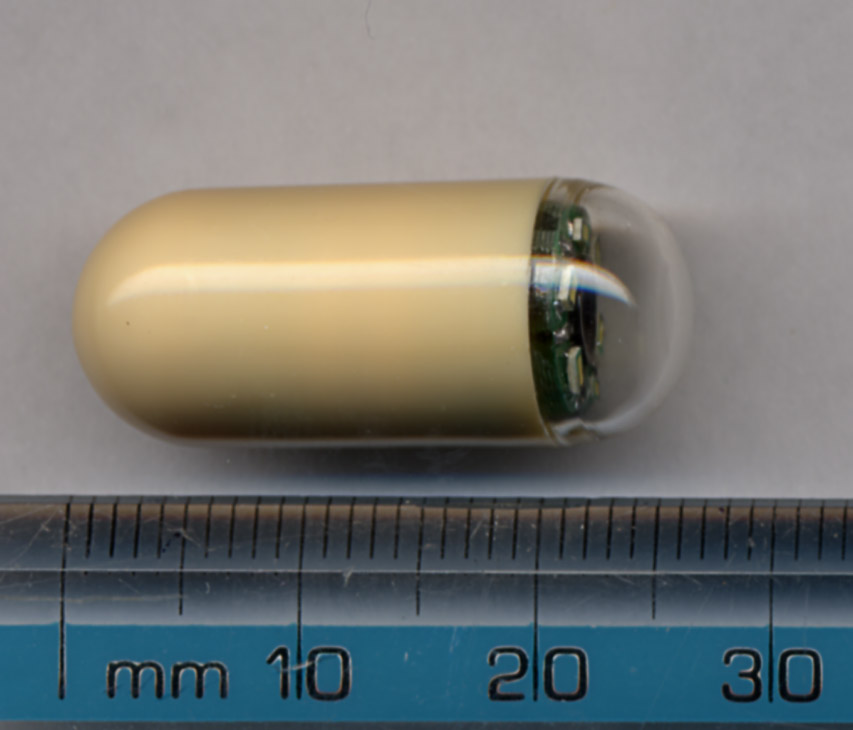
For those of you who don't enjoy this snake-like thing traveling through your body, go smaller! There is something called a capsule endoscopy. Basically, it's a camera in pill form. Isn't that so awesome? This is more useful for looking at diseases in the small intestine and detect causes of abdominal pain such as Crohn's disease or peptic ulcers.


Let us now tackle a health problem that has overrun most of the human population: OBESITY. You probably know what that means but I'll give an explanation for the sake of it. Obesity is when we accumulate excess body fat to the point that it affects our overall health such as reducing our life expectancy. For those that have problems with exercise due to heart problems or laziness, there is a solution! It's called a "laparoscopic adjustable gastric band." That's a mouthful so we'll call it a lap band for short. The lap band is like a belt for your stomach. It wraps around the upper part of your stomach and controls our hunger. Though a little risky because of some side effects, it is effective.


One final point. This is completely from my general knowledge. People need to start eating healthier foods. For starters there's your fruits and vegetables...common sense (which is not that common). Second, there's so many food alternatives that are being produced for our benefit such as whole grain chips, lower fat content in meat, recipes for making foods healthier, the list goes on. I suggest that we start taking our health seriously and start eating those fruits and vegetables. Third, I think it's time to bust out the gym equipment that's collecting dust in your basement HAHAHA!. By the way, for those without gym equipment, it wouldn't hurt to get up and jog for a few minutes wouldn't it?

WORKS CITED

http://en.wikipedia.org/wiki/Insulin
http://en.wikipedia.org/wiki/Endoscopy
http://en.wikipedia.org/wiki/Diabetes_mellitus
http://en.wikipedia.org/wiki/Capsule_endoscopy
http://en.wikipedia.org/wiki/Obesity
http://en.wikipedia.org/wiki/Adjustable_gastric_band

Wednesday, February 17, 2010

The science behind plastic surge--oh I mean Artificial Selection.

Ah, nature... the biggest shopping mall ever created. That's right; A SHOPPING MALL. How? Think of EVERYTHING in we see as being able to be selected, kind of like "off the shelf" products. You just pick which ingredients you want and what you don't want and then you go home and make some weird concoction of your own; your own little twisted original creation or invention. Well, that's how the world works. Well, at least in majority of the aspects. It's kind of our fault. Correction, IT IS OUR FAULT.

Haha, I'm not saying it's a bad thing. Not exactly saying it's a good thing either. In an artificial selection debate, I'm caught right in the middle. It has its pros and
cons, you know?


HOW CAN YOU NOT LAUGH OUT LOUD AT THIS?!


Under specific circumstances, artificial selection is good for us. Take a look at the wild mustard plant:


From just one plant, we have made a variety of healthy green vegetables for ourselves, ranging from broccoli (not my personal favourite), cabbage, cauliflower, and Brussels sprouts. These vegetables were created out of artificial selection and now prove to be healthy for our digestive and overall health.


And also take a look at dogs:

Pure bred dogs are actually different versions of their ancestor, the wolf. Each species of dog has specific alleles and traits that were isolated and selected to make their desired characteristic. Like any fashion show, the contestants are...FAKE! (HAHAHA)


Now turn your attention away from the good and let's face the BAD (it sucks but it's the truth).

Ever heard of variation? This is the science behind why each one of us look unique. Our genetic make-up is not exactly the same as everyone else. It is because of variation that we are able to survive specific conditions, look in a specific way, or do specific actions. How is this related to artificial selection? Let me explain...

In animals, only the same species can mate with one another. If they mate with other species, then there is a high possibility that their offspring will not live long or not live at all.
Different species of dogs, for example, are caused by artificial selection. Different species such as collies, poodles, retrievers, etc. can only have offspring with a mate of the same species. But the problem with dogs of the same species is that they can only have offspring that have the same genetic make-up, then that means that the resulting puppies are not special. They have the same resistances and strengths as their parents. They are restricted to those abilities. They will not be able to survive different disasters or become immune to different diseases. Variation is not achieved.


The bottom line:


Artificial selection can have its good and bad sides. It just depends on how we look at it and how we use it; just as long as we take the effects and consequences into consideration.


You have been warned...


SOURCES: